 Los Angeles Intellectual Property Trademark Attorney Blog


Los Angeles, CA – Godzilla knocked over buildings and stomped its way to the Federal District Court in Los Angeles to file suit against Subway because it’s furious over the use of its image in Subway restaurant commercials, which sandwiches it apparently doesn’t enjoy or endorse. Maybe Megalon, Godzilla’s nemesis, is interested in the gig? Toho Co., the owner of the Godzilla franchise, sued Doctor’s Associates, Inc., the owner of the Subway sandwich empire, for trademark infringement and copyright infringement for use of the Godzilla character in its “Five Dollar Footlong” sandwich commercials. “The commercial at issue, which was created for Subway by advertising agency McCarthy Mambro Bertino, LLC in support of Subway’s ‘Five Dollar Footlong’ sandwich promotion, features Godzilla attacking a Japanese city and then endorsing the sandwich by spreading his hands a foot apart.” The advertising agency is also sued as a defendant.
“At no time did Defendants seek or obtain Toho’s permission or consent to use or feature the Godzilla Character or any substantially or confusingly similar character in the Commercial.” Apparently, when Toho learned of the commercial, it demanded the defendants cease airing the commercial. “Rather, defendants have continued airing the Commercial on popular television programs, including the NCAA Basketball Tournament semi-final and Championship games” and American Idol. The Complaint estimates that the defendants have spent at least $20 million in TV-air-time alone. Toho alleges that Subway has made millions of dollars as a result of the unauthorized commercial use of the Godzilla character and seeks the disgorgement of Subway’s profits and its costs and attorneys’ fees.
WATCH THE COMMERCIAL:
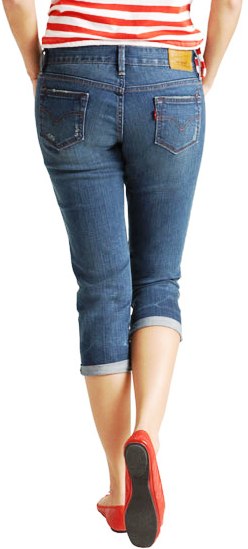 Levis alleges that defendant Jeans City manufactures, sources, markets and/or sells “jeans that diplay designs on the rear pockets that are confusingly similar to [Levis’] Arcuate and Tab trademarks.” The complaint alleges that “Jeans City’s actions have caused and will cause [Levis] irreparable harm for which money damages and other remedies are inadequate. Unless Jeans City is restrained by this Court, Jeans City will continue and/or expand the illegal activities alleged in this Complaint and otherwise continue to cause great and irreparable damage and injury to Levis.” Levis claims that it will be harmed by not being able to use and control use of its trademarks, a likelihood of confusion, mistake and deception created in the minds of consumers, false association between Levis and Jeans City, and loss of goodwill. The complaint alleges the following causes of action: (1) Trademark infringement under 15 U.S.C. § 1114; (2) Federal unfair competition, false designation of origin, and false description under section 43(a) of the Lanham Act, 15 U.S.C. § 1125(a); (3) Federal trademark dilution under the Lanham Act section 43(c), 15 U.S.C. § 1125(c); (4) California dilution and trademark infringement under Cal. Bus. & Prof. Code §§ 14320, 14330, 14335, 14340; and, (5) Unfair competition under Cal. Bus. & Prof. Code § 17200. The case is titled Levis Strauss & Co. v. Jeans City USA, Inc., CV08-01639 WHA (N.D. California).
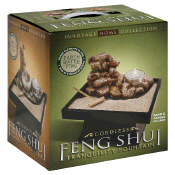 Innovage did not wait for Style Asia to disturb its harmonious, Zen like use of its Feng Shui trademark and instituted a lawsuit against Style Asia. Innovate alleges that it, and not Style Asia, was first to use the Feng Shui trademark and despite Style Asia’s trademark registration, Innovage sued for trademark infringement and unfair competition under section 43(a) of the Lanham Act (15 U.S.C. § 1125(a)). The complaint alleges that Style Asia’s use of the Feng Shui trademark “is likely to cause confusion, mistake and deception of the public as to the identity and origin of its own and of Innovage’s goods, causing irreparable harm to Innovage.” The complaint also asserts a California common law unfair competition claim and alleges that Style Asia took advantage of Innovage’s goodwill in the trademark. Innovage also asks the Court to declare that it does not infringe on Style Asia’s trademark and requests the Court order cancellation of the registration at the USPTO. The case is titled Innovage LLC v. Style Asia, Inc., CV08-00310 JVS (Central District California).
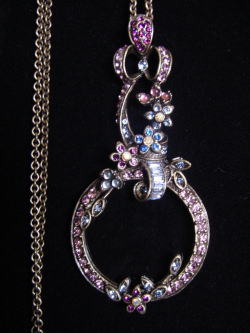 The complaint alleges that defendants, which are various entities related to the Home Shopping Network, began manufacturing and selling copies of the Work, which are virtually identical to Plaintiff’s work, except for the name given to the jewelry piece. The complaint alleges that the Defendants’ copies are cheap imitations manufactured in China and instead of the stones being made of Czech crystal, as represented on the Home Shopping Channel, the “stones” appear to be plastic or other inferior materials. (SIDE NOTE: If that is the case, it’s puzzling why the Plaintiff does not include a false advertising/unfair competition claim under the Lanham Act). The complaint continues that the defendants’ copy of the work is allegedly not sold in California because the high concentration of lead violates California’s strict environmental and safety regulations. Also, plaintiff alleges that Defendants had access to copies of the Work because they were involved in negotiations to market plaintiff’s work. The complaint seeks damages under