 Los Angeles Intellectual Property Trademark Attorney Blog


Los Angeles, CA – A mother-daughter team founded The Little Giraffe, Inc. to manufacture baby and adult accessories, apparel and giftware under the trademarks, registered with the USPTO, of “Little Giraffe” and “Giraffe at Home.” The mother, Marcia Brower, and the daughter, Sharyn Brower Newberg, were each a 50 percent owner of the shares of the corporation. The complaint alleges that the daughter breached her fiduciary duty to the company and used company checks to “pay personal expenses, wiring funds from the corporate account to pay her credit card bills, selling Little Giraffe inventory for her own account, purging vital information from her computer at company headquarters, and removing vital fabric samples and company property.” The complaint continues that the daughter, “with the help of her co-defendants, secretly took steps to set up a company to compete against Little Giraffe under the name ‘Votre Luxe,’ intentionally copying the distinctive look and feel of Little Giraffe’s products,” including the trade Dress, trade secrets, and proprietary business information.
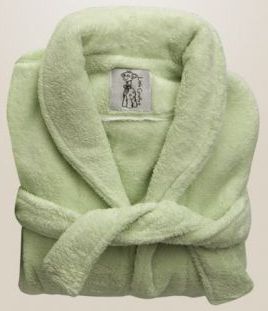 Plaintiff asserts that its trade dress includes the appearance of its products, including “the shape and dimensions of satin trim to plush fabric,” “the color combinations of various fabrications,” “the texture of its plush or luxury fabrics,” “the patterns of Little Giraffe’s robes,” color coordinated pieces to the colors of the products of Little Giraffe, and the placement location of the Little Giraffe logo. Plaintiff also asserts that its trade secrets include “vendors and suppliers of fabric and trim, its know-how concerning the manufacturing process,” “the cutting and sewing contractors” it uses in the manufacturing process, its vendor lists, customer lists, and proprietary financial documents. Plaintiff alleges that her daughter, in association with co-defendant “Rosalie & Friends, Inc. has displayed and offered for sale Votre Luxe’s line of products that are confusingly similar to the products Little giraffe manufactures and sells.”
The complaint sets forth the following six causes of action: (1) Breach of Fiduciary Duty, (2) Trade Dress Infringement Lanham Act 43(a), 15 U.S.C. § 1125, (3) Trade Secrets Misappropriation, (4) Conversion, (5) Unfair Competition Under Cal. Bus. & Prof. Code § 17200, and (6) Injunctive relief. The case is titled: Marcia Brower v. The Little Giraffe, Inc., CV08-01111 PSG (C.D. California).
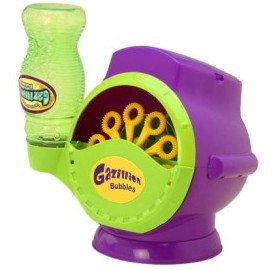 The complaint alleges that the Aahs defendants manufacture and sell bubble machines which are substantially copied from the plaintiff’s “Gazillion Bubble Machine and box packaging and Defendants Aahs’ bubble bottle and wand is substantially copied from and contains the same physical appearance and features as the trade dress of” Plaintiff’s products or is a reproduction, counterfeit, copy, or colorable imitation thereof. Plaintiff further alleges that that defendants’ infringing product “is likely to, was intended to, and did cause confusion or mistake or to deceive the relevant trade and the public into believing that the” infringing product is “sponsored by, authorized by, associated with, originates from, and/or is in some way connected with or licensed by Plaintiff.” Plaintiff continues that the infringement was willful and intentional to trade upon plaintiff’s goodwill and reputation and asks for enhanced damages and attorneys’ fees. Plaintiff also asserts causes of action for Lanham Act unfair competition Section 43(a), and unfair competition under California Business and Professions Code § 17200. The case is titled: Funrise, Inc. v. Bhasin Enterprises, Inc., CV08-01117 DSF (C.D. California February 20, 2008).
 Tom Gramatis was one of the original defendants in the 2002 lawsuit and settlement agreement and he has recently built two additional buildings with rooftop seating. The Cubs allege that Gramatis breached their settlement agreement by not paying the agreed upon royalties and has not paid any royalties for the new buildings. Interestingly, the Cubs have dropped their dubious copyright infringement claim from this lawsuit – undoubtedly a lesson learned from 2002 – and only assert that Gramatis is infringing on the Cubs’ trademarks and falsely advertising an association with the team in his promotional material and website. The Cubs allege that “Defendants’ marketing efforts are, and have been, likely to cause confusion, to cause mistake or to deceive as to, inter alia, the affiliation, association or connection between Defendants and the Cubs and the Cubs’ approval or sponsorship of Defendants’ business activities.”
  Chanel alleges that Defendants are “promoting, and or otherwise advertising, distributing, selling, and/or offering for sale counterfeit products, including at least necklaces and costume jewelry bearing trademarks which are exact copies of Chanel Marks” and are counterfeit, lower quality goods that also incorporate Chanel’s trade dress. The complaint further alleges that the “net effect of Defendants’ actions is to confuse consumers who will believe Defendants’ Counterfeit Goods are genuine goods originating from and approved by Chanel.” In addition to preliminary and permanent injunctive relief, Chanel seeks three times its actual damages under 15 U.S.C. § 1117, or, at its election, seeks statutory damages of $1,000,000.00 (one million dollars) from each defendant under 15 U.S.C. § 1117(c)(2) of the Lanham Act. The case is styled as Chanel, Inc. v. Kin Fung Poon et al., EDCV08-0224 VAP (CD CA 2008).

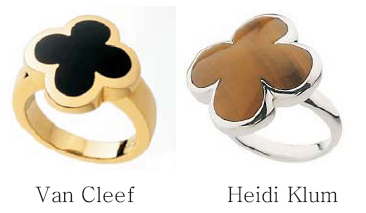 Van Cleef alleges that defendants intentionally and willfully copied the Alhambra designs, which mainly feature a four leaf clover. Van Cleef continues that defendants, by appropriating the goodwill built up by plaintiff are causing confusion in the market place, in that consumers are often confused between the plaintiff’s designs and those of defendants.
 The Panel found that the medical company’s trademark and the misspelled domain name were confusingly similar. Also, the pay-per-click advertising on the parked website targeted the same consumers based upon offers for competing medical equipment and the registrant did not have any rights or interests in the confusingly similar trademark. Further, the Panel found that the domain was registered in bad faith because it was registered after the trademark application was filed and offered similar products through pay-per-click ads. Thus, the Panel ruled that the registration “was an act of typo squatting and was calculated to confuse Internet users as to the source of and to take commercial advantage of the Complainant’s rights in the LAERDAL trademark.”