 Los Angeles Intellectual Property Trademark Attorney Blog


Los Angeles, CA – Patent attorneys filed a patent infringement lawsuit, in Los Angeles Federal District Court, on behalf of Bella Bella, Inc. against numerous cosmetic products manufacturers for allegedly infringing a patent covering a cosmetic composition used in micro-dermabrasion procedures. Bella is the assignee of U.S. Patent No. 6,290,976 titled “Facial skin dermabrasion cleansing and conditioning composition.” The complaint alleges that each of the laundry list of defendants “has infringed and continues to infringe the ‘976 patent by making, using, providing, offering to sell, and selling … microdermabrasion products containing alumina.” Bella alleges that some of the defendants were aware of the ‘976 patents because it had been cited as prior art in the defendants’ own patent application. Also, as to some of the other defendants, Bella alleges that they were aware of the ‘976 patent because Bella had contacted them to offer a license to practice the invention. Bella seeks a permanent injunction in addition to monetary damages for patent infringement. The case is titled Bella Bella, Inc. v. Neutrogena Corporation, et al., CV08-01270 GAF (C.D. California).
Here’s the list of the “et al.” defendants, if you’re interested: Johnson & Johnson, DermAnew, Inc., Sharper Image, Physicians Formula Holdings, Inc., Physicians Formula Cosmetics, Inc., American International Industries, Guthy-Renker Corporation, Stearn’s Products, Inc., Derma E, L’Oreal S.A., L’Oreal USA, Inc., Laboratories Garnier Paris, Garnier LLC, Lancome Perfumes et Beaute, Avon Products, Inc., Mary Kay, Inc., Graf Skin Care, Inc., Homedics-U.S.A., Inc., Borghese, Inc., Photomedex, Inc., Procyte Corporation, Kao Brands, Beauticontrol, Inc., ABBE Laboratories, Inc., Guinot, Lachman Imports, Inc., Estee Lauder Companies, Inc., Prescriptives, Inc., Peter Thomas Roth, Inc., Platinum Skin Care, and, LAST BUT NOT LEAST, Cosmesis Skincare, Inc.
 Licensing negotiations hit a sour note and Activision filed the instant complaint asking the District Court in Los Angeles to rule that the ‘405 Patent is invalid and/or not infringed by the Guitar Hero video-game. Activision also alleges that because Gibson has been aware of the Guitar Hero video-game for many years and has encouraged its sale, that Gibson should be estopped from asserting the patent. Also, because Gibson has encouraged the sale of the games, Activision argues that it has an implied license under the ‘405 patent. Further, Activision alleges that because Gibson has been fully aware of the Guitar Hero video-game for several years, it should not be able to enforce the patent under the doctrine of laches. The case is titled Activision Publishing, Inc. v. Gibson Guitar Corporation, CV08-01653 PSG (C.D. California).
 The complaint continues that the franchisee must also agree to allow Dairy Queen to audit the financial records to determine whether the proper amount of the licensing fee is being paid. If any of these franchising terms were not met and cured, it would constitute a default and the franchise rights would be terminated. After termination, the franchisee would agree to immediately cease the use and display of all of Dairy Queen’s trademarks. The terminated franchisee would also need to pay a termination fee to compensate Dairy Queen for the early termination of the franchising agreement. The complaint alleges that defendant Lee failed to comply with the upkeep standards set by Dairy Queen for its franchisee’s location and was given 60 days to correct the deficiencies, which went uncorrected. The complaint also alleges that, after an audit, it was determined that Lee underpaid Dairy Queen by $16,911.84, which Lee failed to pay after receiving notice. The complaint alleges the following causes of action: (1) Trademark infringement of USPTO registered trademarks; (2) False designation of origin under the Lanham Act 43(a) (15 U.S.C. 1125(a)); (3) Federal trademark dilution of famous trademarks under the Lanham Act 43(c) (15 U.S.C. 1125(c)); (4) Trademark counterfeiting; and (5) Breach of contract. The case is titled American Dairy Queen Corporation and DQF, Inc., v. Myung Taek Lee, CV08-01505 AHM (C.D. California).
 Plaintiff alleges that “Defendant adopted and began using the Newport Dental Group mark with actual or constructive knowledge of [Plaintiff’s] prior use and application to register the Newport Dental Marks, and with the intent to trade on the goodwill and reputation of the Newport Dental Marks. Defendant’s use of the Newport Dental Group trademark, the complaint alleges, “is likely to lead to lead consumers to erroneously believe that Defendant’s services originate from or are otherwise sponsored by, approved by, or affiliated with the owner of the Newport Dental” trademarks. In addition to preliminary and permanent injunctions, Plaintiff seeks monetary damages and attorneys’ fees as a result of the Defendant’s alleged trademark infringement. The case is titled Bright Now! Dental, Inc., v. Newport Dental Group, SACV08-00223 JVS (C.D. California).
 Watson has beaten the patent owners to the punch and filed a declaratory judgment action because it believes that it will be sued for patent infringement. Watson seeks a declaration from the Court that the patent is “is invalid, unenforceable and/or not infringed by the commercial manufacture, use or sale of the drub product described in Watson’s ANDA.” The case is titled Watson Laboratories, Inc., v. Duramed Pharmaceuticals, Inc., SACV08-0243 JVS (C.D. California).
 Nike alleges that two individual defendants manufacture, distribute, and or sell counterfeit footwear bearing the Nike trademarks through several websites. Nike alleges that the two individual defendants are residents of Long Beach, California and base their counterfeiting operations there. Nike’s federal trademark infringement arises under Sections 32 and 43 of the Lanham Act, 15 U.S.C. §§ 1114 and 1125. Nike’s Lanham Act – unfair competition claim arises under section 43(a) of the Lanham Act, 15 U.S.C. § 1125(a) and (d) for false designation of origin and false descriptions and representations in interstate commerce. Nike’s dilution of famous marks arises under the Lanham Act section 43, 15 U.S.C. § 1125(c). The case is titled Nike, Inc. v. Nyla Kauv, CV08-01404 ODW (C.D. California)
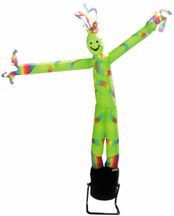 Plaintiff alleges that several defendants are infringing its patent by making, selling, and using undulating figure products embodying the patented invention. Plaintiff also states that defendants are infringing on its “Fly Guy” trademark by using the confusingly similar “Fly Guys” trademark. In addition, Plaintiff contends that the defendants are using its “Fly Guy” trademark as a Google adword to redirect consumers to defendants’ websites. The complaint asserts causes of action for infringement; federal trademark infringement of registered trademark (15 U.S.C. §§ 1114-1117; Lanham Act § 32); federal unfair competition (false designation of origin and false description (Lanham Act 43(a) and 15 U.S.C. 1125); trademark infringement under California law; California unfair competition under section 17200; and trademark dilution. Plaintiff alleges that the infringement is willful and intentional and requests that the damages be trebled. The case is titled Air Dimensional, Inc., v. Action Sky Dancers, CV08-01121 GW (C.D. California).