 Los Angeles Intellectual Property Trademark Attorney Blog


Filing a trademark application with the USPTO for a descriptive trademark does not provide enforceable trademark rights until secondary meaning can be established, after which the trademark can be registered on the principal register from the supplemental register. The trademark owner learned the drawbacks of choosing a descriptive trademark when attempting to enforce its trademark rights against a domain name registrant in a National Arbitration Ruling that was filed under the Uniform Domain-Name Dispute-Resolution Policy (“UDRP”).
Complainant trademark owner B&V Associates, Inc. filed a trademark application for its ewaterways.com trademark on July 26, 2000. However, because the USPTO deemed the mark was merely descriptive of applicant’s services, B&V amended its application to seek registration under Trademark Act Section 2(f), 15 U.S.C. Section 1052(f), based on acquired distinctiveness as a result of continued and exclusive use since 1996. On June 18, 1999, a year before B&V’s trademark application was filed, Respondent registered the ewaterway.com domain name. The Panel found that at the time of Respondent’s domain name registration, Complainant, as admitted by its Section 2(f) filing with the USPTO, had not established trademark rights because it had not acquired distinctiveness. Accordingly, because Complainant did not meet the initial burden of presenting a sufficient prima facie case showing of enforceable rights in the trademark at the time of the domain name filing, the Panel denied cancellation or transfer of the domain name. Click To Read The Decision.
PRACTICE NOTE: It is best to adopt a trademark that is immediately protectable and enforceable. Descriptive trademarks are not immediately protectable and require a showing of acquired distinctiveness. Click To Read Suggestions On Selecting A Proper Trademark.
 The complaint alleges that in disregard of Paige’s exclusive rights in the designs, Mervyn’s is copying the copyrighted stitching designs and confusingly similar designs. Paige also contends that Mervyn’s conduct was willful and intentional and that Mervyn’s products are of inferior quality. The lawsuit sets forth five causes of action and seeks a preliminary injunction and a permanent injunction of Defendants’ alleged conduct:
 Clear Blue Sky argued that it should benefit from Bradford’s earlier domain name registration because it acquired all rights and interests through a written assignment and denied bad faith registration and use of the domain name. Paragraph 4(a) of the Policy requires that the Complainant prove three elements to obtain a decision that a domain name should be either cancelled or transferred, one of which includes that “the domain name has been registered and is being used in bad faith.” In rejecting Respondent’s “relation back” theory, the Panel found that:
 Palantir.net moved for a preliminary injunction to stop PTI’s use of the trademark “palantir” in advertising its services. The California Northern District Court granted the preliminary injunction and found that: “Palantir.net has easily proven the existence of serious questions going to the merits; indeed, the Court finds that it has also demonstrated a probable success on the merits given (1) the virtual identity of the marks, (2) the strength of the mark, (3) the relatedness of the goods, and (4) both parties’ use of the Internet.”
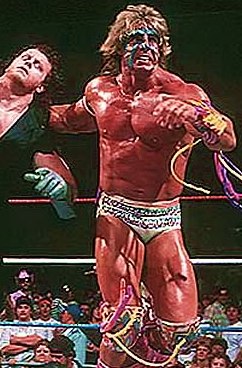 THQ later produced a wrestling video game that allowed players to create their own character or select from real-life wrestlers. The create-a-wrestler feature allows a player to select the wrestler’s appearance, select a name (“Warrior” was an option), assign signature wrestling moves, including entrance moves into the ring, and entrance music. Plaintiff argued that the video game allowed players to create a wrestler that “has a similar build, face paint, and logo symbol as Warrior, that uses the entrance and finishing moves” and the same name “The Warrior” or “Warrior.” Defendant conceded that players exchange information on the internet on how to build “The Warrior” character and that it issued “a preliminary marketing document stating that Warrior would be in Defendant’s ‘Day of Reckoning’ video game was released on April 1, 2005, but was then retracted.”
 The complaint explains that Clint Eastwood is very selective in the use of his name, image, and likeness and did not authorize Palliser’s use of “The Eastwood” designation. In addition to the federal Lanham Act (15 U.S.C. § 1125) claim, the complaint adds a cause of action for misappropriation of name in violation of California Civil Code § 3344, where the use of the “Eastwood” name for commercial gain and profit was not authorized or licensed by the plaintiff. To round up the good, the bad, and the ugly, the complaint adds a common law claim for misappropriation of name or likeness.
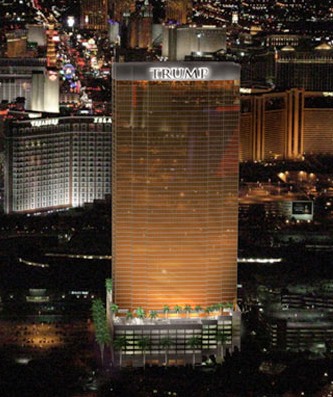 Also, Nights at Vegas accuses the Trump Defendants of antitrust violations for entering into exclusive deals with online travel sites to only use the Trump owned management-company, refusing to deal with the plaintiff, and intimidating real estate agents to suppress the fact that condo owners can deal with plaintiff. Plaintiff alleges that they only charge a twenty percent commission for the rented condos and Trump charges fifty percent.